Adorely

Reference

Milestone birthdays, and what each one is actually called

By Pash, founder of Adorely · Updated August 24, 2026 · 5 min read

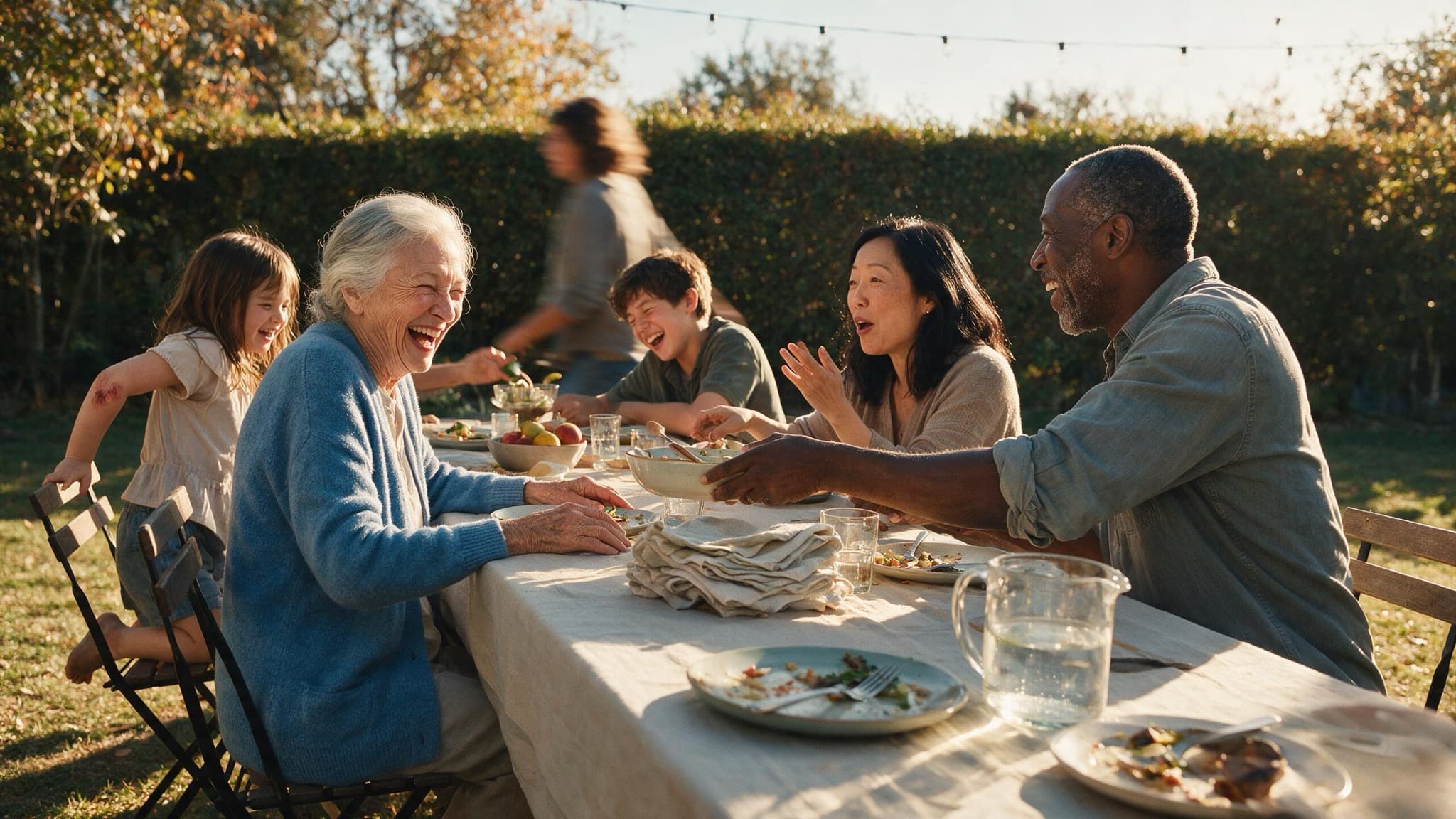
Three generations of a family at a long table outdoors, the oldest woman mid-laugh at the head of it

A milestone birthday is any age a culture has decided to mark separately, and the list is longer and less universal than most people assume. Thirteen matters enormously in one household and not at all next door. Sixty is the largest birthday of a lifetime in several traditions and an ordinary one in others. Below is a plain reference: the age, what it is called, and where it is observed.

One correction first, because it is the most common mistake in this subject. Silver, golden and diamond are anniversary words, not birthday words. A fiftieth wedding anniversary is golden. A fiftieth birthday is a fiftieth birthday.

The ages, in order

1.First birthday, almost everywhere

The most widely observed milestone on the list, and in many places the largest party a person will have until they marry. In Korea it is doljanchi, which includes doljabi, where the child picks an object said to hint at their future. In much of India the first birthday is when the child is formally introduced to the extended family.

2.12 or 13, bar and bat mitzvah

In Jewish tradition a boy becomes bar mitzvah at thirteen and a girl bat mitzvah at twelve in Orthodox practice, or thirteen in Reform and Conservative practice. The term describes the status rather than the party: a person becomes bar or bat mitzvah whether or not anything is held to mark it.

3.15, quinceañera

Across Latin America and Latino communities in the United States, a girl fifteenth birthday is marked with a celebration that is frequently larger than a wedding. It usually includes a Mass, a formal dress, and a court of honour of friends. The equivalent in Brazil is the festa de quinze anos.

4.16, sweet sixteen

Distinctly American and Canadian, with no real equivalent elsewhere, which surprises visitors constantly. It carries no legal or religious meaning at all. Its weight is entirely cultural, and it is one of the few milestones on this list whose significance is purely the fact that everybody agrees it is one.

5.18, legal adulthood in most of the world

The age of majority across most of Europe, India, Australia and Canada, and in the United States for everything except alcohol. In the Philippines an eighteenth birthday debut for a girl is a major formal event with eighteen roses, eighteen candles and eighteen treasures, each presented by a different person.

6.20 or 18, Seijin no Hi in Japan

Japan marks coming of age collectively rather than individually, on a public holiday in January, for everyone reaching the age that year. The threshold was twenty for decades and was lowered to eighteen in 2022, so families with older children may have marked it at a different age from younger ones.

7.21, the American milestone

Twenty-one is the legal drinking age in the United States, which is what gives it its weight there and why it lands so much harder in America than anywhere else. In Britain it retains a ceremonial echo from when it was the age of majority, but the practical meaning left when that changed to eighteen.

Rewind template: a scrapbook-style page holding photographs and written messages

8.30, 40 and 50, the decade birthdays

These are milestones by arithmetic rather than by tradition, which is exactly why they carry so much anxiety: nothing about them is prescribed, so everybody invents the meaning themselves. They are the most searched birthdays of all, and the least ritualised, which is an unusual combination.

What to actually do for a 50th

9.60, kanreki and shashtipoorthi

The largest birthday in several Asian traditions, because sixty completes a full cycle of the traditional calendar and the person is said to begin again. In Japan it is kanreki, marked by wearing red. In Korea it is hwangap. In South Indian Hindu families it is shashtiabdapoorthi, often celebrated with the couple marrying again. The date is calculated rather than assumed, so families check it with a priest.

10.65, a bureaucratic milestone in the United States

Not a tradition and not celebrated, but worth listing because Americans plan around it: sixty-five is when Medicare eligibility begins. It shows up in this list only because it is the age a US family is most likely to be doing paperwork about, which is a strange kind of milestone but a real one.

11.70, 77 and 88 in Japan

Japanese longevity celebrations continue past sixty on a schedule most other traditions do not have. Seventy is koki, seventy-seven is kiju, and eighty-eight is beiju, each with its own colour and customs. The later ones are tied to how the numbers are written rather than to arithmetic, which is why the ages look arbitrary from outside.

Love Letter template: a soft, personal page built around one long written message

12.80 and beyond, sathabhishekam and the official letter

In South Indian tradition sathabhishekam marks having seen a thousand full moons, which falls a little after the eightieth birthday rather than exactly on it. In the United States the White House Greetings Office has long sent greetings for eightieth and later birthdays, and the UK monarch sends a card at one hundred. Both programmes change, so check the current form rather than promising anybody anything.

13.Why silver and golden are not on this list

Because they are anniversary words. Silver is twenty-five years of marriage, golden is fifty, diamond is sixty, and none of them describe a birthday. The confusion is so widespread that card shops sell both, but a card reading golden birthday means something different again: an American usage for the year your age matches your birth date, so somebody born on the 24th has theirs at twenty-four.

Quick answers

What counts as a milestone birthday?

Any age a culture marks separately, which is less universal than it sounds. The decade birthdays are milestones by arithmetic. Others are fixed by tradition, such as fifteen for a quinceañera, thirteen for a bar mitzvah, or sixty for kanreki and shashtipoorthi, and those carry meaning only within the tradition that names them.

What is a golden birthday?

An American usage for the year your age matches the day of the month you were born, so somebody born on the 24th has their golden birthday at twenty-four. It is unrelated to a golden wedding anniversary, which is fifty years of marriage, and the two get confused constantly.

Why is the 60th birthday such a big deal in some cultures?

Because sixty completes a full cycle of the traditional calendar, so the person is understood to begin again. That is the basis of kanreki in Japan, hwangap in Korea and shashtiabdapoorthi in South India, and it is why the sixtieth outweighs the fiftieth in all three.

Are silver and golden birthdays a real thing?

Not in the way most people mean. Silver, golden and diamond are anniversary terms for twenty-five, fifty and sixty years of marriage. Applied to a birthday they are a mix-up, with the single exception of the American golden birthday, which means something else entirely.

Turn the idea into the gift.

Photos, your words, their song, and wishes from everyone, on one beautiful page, shared with one link.

Make a birthday page (free)

Keep reading